
Project Overview
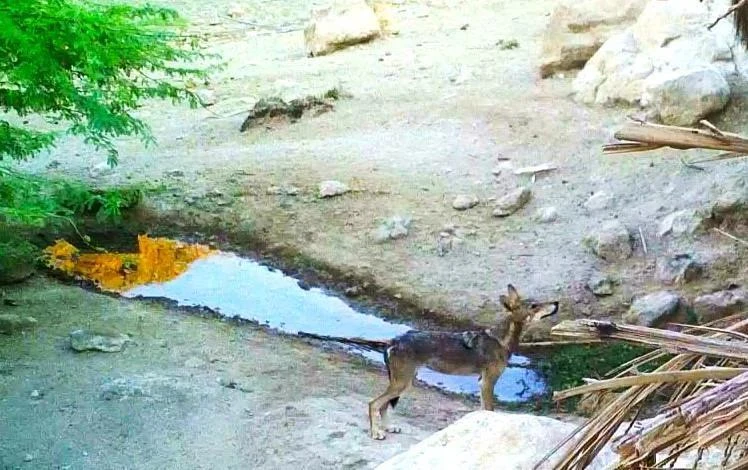
This project aimed to assess the occurrence, distribution, and conservation status of the threatened Arabian wolf (Canis lupus arabs) in Palestine, one of the region’s remaining apex predators and a subspecies facing significant threats across its geographic range. Due to limited scientific data and increasing human pressures on wildlife habitats, the ecological status of the species in Palestine remained largely undocumented. The project sought to generate baseline information on the species’ presence, ecological role, and interactions with local communities, particularly in desert and semi-arid ecosystems.
Key Information
- Funded by
- Centre for Compassionate Conservation – University of Technology Sydney
- Duration
- 2 years
- Location
- Jericho District and the Jordan Valley, Palestine
- Direct beneficiaries
- Bedouin communities and environmental conservation stakeholders
- Implementation period
- 2021 – 2023
Objectives
To document the presence, distribution, main threats, and ecological status of the Arabian wolf in Palestine and Jordan, to generate scientific knowledge that supports conservation efforts and improved human–wildlife coexistence.
Key Activities
The project employed a combination of ecological research methods, including field surveys, camera trapping, and opportunistic sampling to detect wolf presence across targeted areas. Interviews with local communities, particularly Bedouin herders and residents in the Jordan Valley, were conducted to gather local ecological knowledge and information about wolf sightings and human-wildlife interactions. The research also examined the ecological role of wolves within the local food web, including their influence on meso-predator populations such as jackals and foxes.
Results and Impact
The project generated new information on the presence and distribution of the Arabian wolf in Palestine and Jordan, and provided insights into the species’ ecological role in local ecosystems. The research contributed to improving scientific understanding of apex predators in the region and highlighted the challenges associated with human–wildlife conflicts. The findings also contributed to broader regional discussions on wolf conservation and coexistence strategies in complex socio-political landscapes.
Strategic Contribution
This initiative represents the first national-level study focusing on the Arabian wolf in Palestine. By documenting the species’ ecological status and distribution, the project contributes to strengthening wildlife conservation knowledge and informing future conservation planning. It also highlights the importance of balancing biodiversity protection with the needs and livelihoods of local communities, promoting more sustainable and inclusive approaches to wildlife conservation.