
Project Overview
The Combating Invasive Plant Species in Palestinian Agricultural Lands (CIPSPA) project addresses the increasing ecological and socio-economic threats posed by invasive plant species (IPS) in Palestine. These species pose significant risks to biodiversity, agricultural productivity, ecosystem functioning, and public health. The project seeks to strengthen the capacity of local communities, civil society organizations, and farmers to identify, monitor, and effectively manage IPS. Through community engagement, scientific monitoring, and targeted field interventions, the initiative contributes to protecting agricultural landscapes, safeguarding crop production, supporting sustainable livelihoods in vulnerable rural areas, and reducing associated environmental and public health risks.
Key Information
- Funded by
- USAID / Global Communities
- Duration
- 12 months
- Location
- West Bank (Ramallah, Jericho, and the Jordan Valley)
- Partners
- Community-based organizations and agricultural cooperative associations
- Direct beneficiaries
- Farmers, women, and youth in marginalized agricultural communities
- Implementation period
- 2024 – 2025
Objectives
To strengthen local capacities and institutional coordination for the identification, monitoring, and effective management of invasive plant species affecting agricultural lands in Palestine, while enhancing public awareness and promoting preventive and sustainable control and management practices.
Key Activities
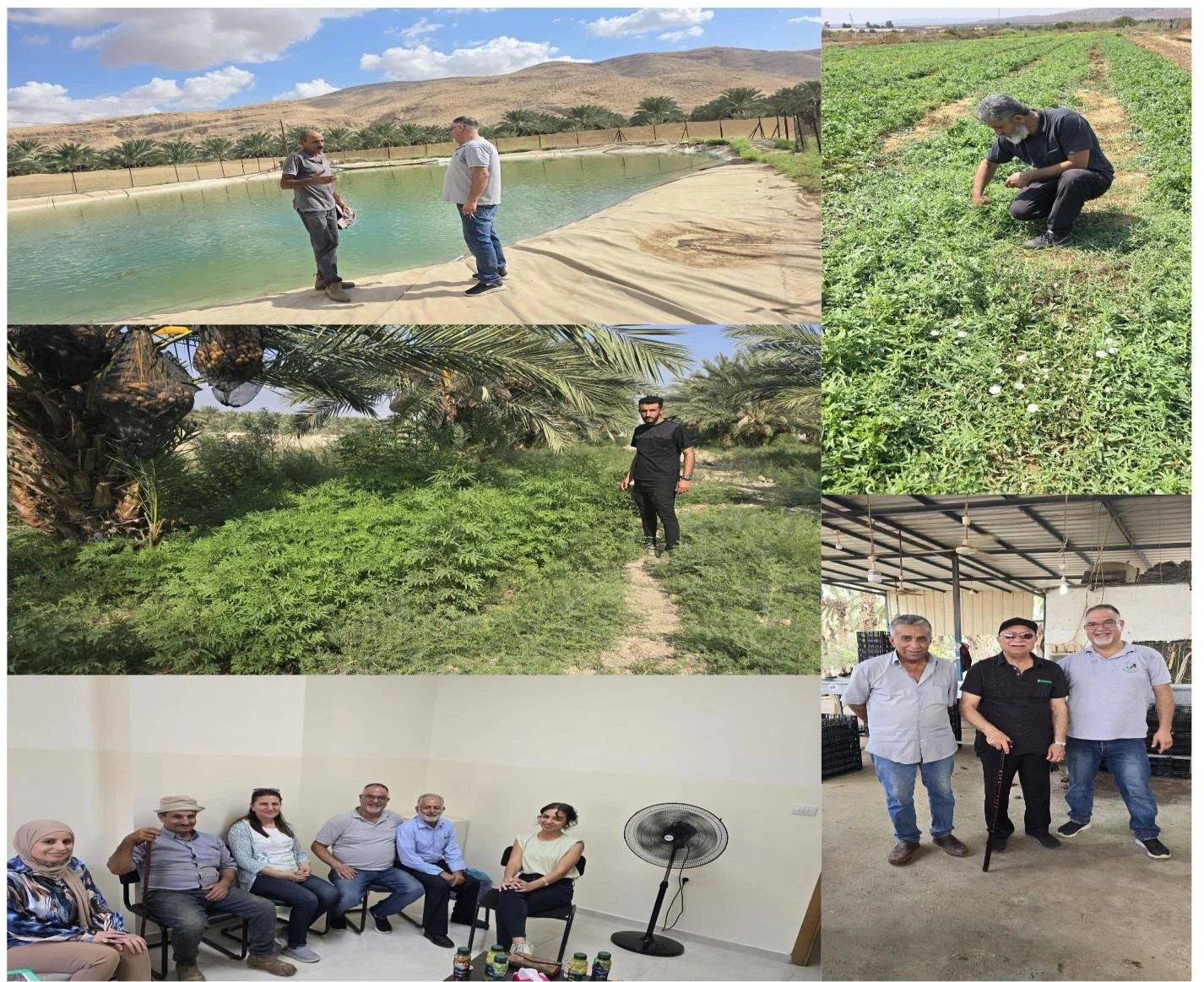
The project implemented a combination of capacity-building, community engagement, and applied environmental monitoring activities. Trainings and workshops were conducted for community-based organizations, farmers, and agricultural cooperatives on the identification, prevention, and management of invasive plant species. Participatory field activities supported practical learning, distribution of eradication tools, and the application of scientific based eradication, control and management methods. The project also promoted knowledge exchange among stakeholders and facilitated the establishment of local coordination and volunteer committees to support invasive species monitoring and response efforts. In addition, a citizen science approach was introduced through a mobile application that enables farmers and community members to document and report invasive species occurrences.
Results and Impact
The project improved awareness and technical capacity among farmers and community organizations to manage invasive plant species and reduce their impacts on agricultural productivity and ecosystems. It strengthened collaboration between local communities and
environmental stakeholders, supported the adoption of practical control measures, and enhanced local monitoring of invasive species spread and distribution. The citizen science component contributed to improving data collection and availability, and community participation in environmental monitoring.
Strategic Contribution
The CIPSPA project contributes to protecting biodiversity, agricultural sustainability, and public health in Palestine by addressing a critical but often overlooked environmental challenge. It strengthens community-based environmental governance, promotes participatory monitoring approaches, and supports national efforts to control and manage invasive species. The project aligns with broader biodiversity conservation priorities and contributes to safeguarding ecosystem services that are essential for rural livelihoods and food security.