
Project Overview
This project focused on assessing the distribution, population status, and conservation needs of Iris atrofusca, a sub-endemic Royal Iris species occurring in the North Eastern Slopes Key Biodiversity Area in Palestine. Despite its ecological importance, the species had not been
systematically studied within the Palestinian context prior to this initiative. The project aimed to generate scientific data on the species, implement in-situ conservation measures, and strengthen local awareness and stakeholder engagement in protecting this threatened plant.
Key Information
- Funded by
- Critical Ecosystem Partnership Fund (CEPF)
- Duration
- 12 months
- Location
- Tubas District, West Bank
- Direct beneficiaries
- Local authorities, site rangers, students, and local communities
- Implementation period
- 2021
Objectives
To assess the distribution and conservation status of Iris atrofusca in Palestine and to implement practical conservation measures that support the protection of this sub-endemic species within its natural habitat.
Key Activities
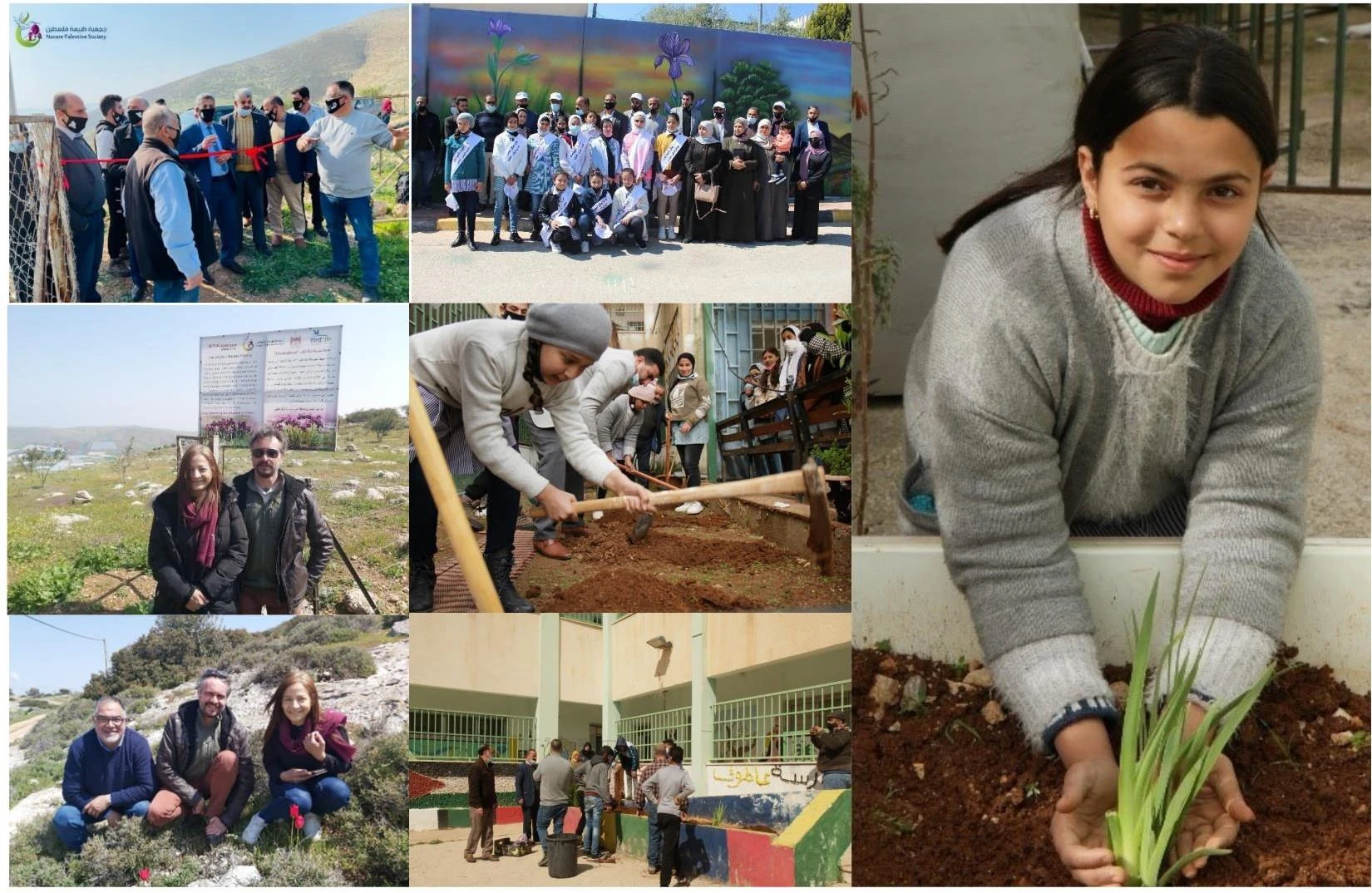
The project conducted extensive field surveys to identify the distribution range and population size of Iris atrofusca within the North Eastern Slopes Key Biodiversity Area and additional sites across the West Bank. Training sessions were organized for local authorities and site rangers on plant identification and biodiversity monitoring, with a focus on Royal Iris species and other key plant taxa. The project also engaged local communities, farmers, and landowners through workshops and awareness activities promoting sustainable land-use practices that support plant conservation. Educational field visits were organized for school environmental clubs and university students to strengthen environmental awareness and participation in biodiversity conservation.
Results and Impact
The project generated the first comprehensive data on the distribution and status of Iris atrofusca in Palestine. One of the most significant outcomes was the establishment of the first in-situ conservation site dedicated to the species within Jabal Tamoun Nature Reserve. The conservation site includes a botanical garden hosting approximately 120 clones of Iris atrofusca within a protected area of approximately 14 dunums. The project also strengthened the technical capacity of local authorities and increased awareness among communities and students regarding the importance of protecting endemic plant species and their habitats.
Strategic Contribution
This project represents a significant step in advancing plant conservation efforts in Palestine by combining scientific research, practical conservation measures, and community engagement. The establishment of a dedicated in-situ conservation site provides a long-term mechanism for protecting Iris atrofusca and supporting ecological research and education. The initiative contributes to national biodiversity conservation priorities and aligns with global efforts to protect threatened plant species and Key Biodiversity Areas.