Project Overview
This research project examined the ecological dynamics and epidemiology of Leishmania tropica, the causative agent of cutaneous leishmaniasis (CL), a vector-borne zoonotic disease affecting communities in the West Bank. The study focused on understanding how environmental and ecological factors influence disease transmission, particularly the
interactions between the sand fly vector, the pathogen, reservoir hosts, and human populations. By integrating ecological research with epidemiological analysis, the project aimed to generate knowledge that can support more effective disease surveillance and control strategies.
Key Information
- Funded by
- MERC–USAID
- Duration
- 3 years
- Location
- West Bank, Palestine
- Partners
- Leishmaniasis Research Unit – Jericho; Ministry of Health
- Direct beneficiaries
- Public health institutions and communities affected by cutaneous leishmaniasis
- Implementation period
- 2021 – 2024
Objectives
To investigate the ecological drivers and transmission dynamics of cutaneous leishmaniasis in the West Bank and to generate scientific knowledge that can support improved disease monitoring and control strategies.
Key Activities
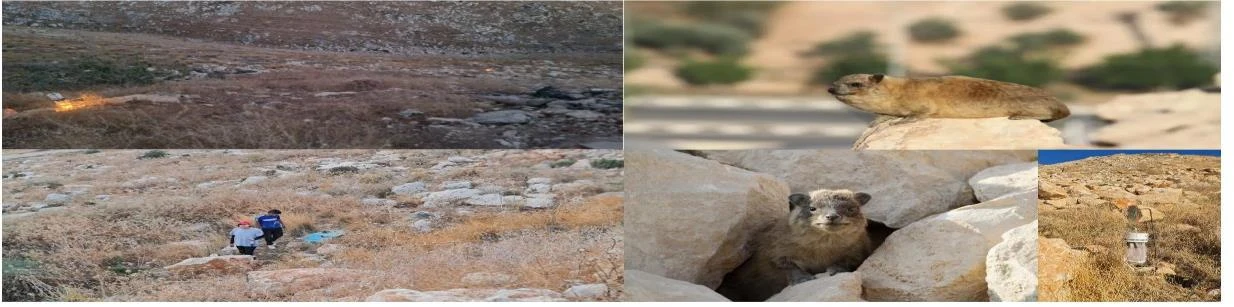
The project conducted ecological and epidemiological studies examining the relationships between the sand fly vector, the Leishmania parasite, reservoir hosts such as rock hyraxes, and human populations. Field surveys and ecological observations were carried out to analyze habitat selection and movement patterns of reservoir hosts and their interactions with vector populations. Data collection included censuses, field sampling, and experimental research. In addition, the project introduced a citizen science approach through a mobile application developed by NPS, enabling community members to report wildlife observations and contribute to ecological monitoring.
Results and Impact
The project generated new insights into the ecological factors influencing the transmission of cutaneous leishmaniasis in Palestine. By examining the interactions between reservoir hosts, vectors, and environmental conditions, the study contributed to improving understanding of disease ecology and potential risk factors for human infection. The research also demonstrated the value of integrating citizen science into ecological monitoring, enabling broader community participation in data collection and environmental health surveillance.
Strategic Contribution
The project highlights the critical link between environmental conditions, biodiversity, and public health. By integrating ecological research with epidemiology, it contributes to a growing body of evidence supporting ecosystem-based approaches to disease prevention. The findings provide valuable information for health and environmental authorities seeking to develop more comprehensive strategies for managing vector-borne diseases in the region.
About the App: Nature Palestine is a multilingual app crafted for the nature enthusiasts of the MENA region. It invites users to document, share, and revel in the rich natural diversity this unique part of the world has to offer. Whether you're an amateur naturalist or a seasoned biologist, this app bridges language barriers, fostering a community around a shared love for nature.
Data Safety: Safety starts with understanding how developers collect and share your data. Data privacy and security practices may vary based on your use, region, and age. The developer provided this information and may update it over time. No data shared with third parties No data collected Data is encrypted in transit Users can request data be deleted
Link: Link for Android users: https://play.google.com/store/apps/details?id=com.naturepalestine society&hl=en Link for IOS users: https://apps.apple.com/us/app/nature-palestine/id6449899955
Android IOS---