Project Overview
This project focused on the conservation of threatened and endemic plant species within the North Eastern Slopes Key Biodiversity Area (KBA) in Palestine. The KBA hosts three rare and globally threatened Royal Iris species (Iris Haynei, Iris lortetii, and Iris atrofusca) in addition to other several threatened plant species of different families that are ecologically significant and culturally emblematic. The project aimed to document the distribution and conservation status of these species, strengthen local conservation capacities, and increase awareness among communities and institutions about the importance of protecting native plant biodiversity.
Key Information
- Funded by
- Critical Ecosystem Partnership Fund (CEPF)
- Duration
- 12 months
- Location
- Tubas and Nablus districts, West Bank
- Partners
- Environment Quality Authority (EQA)
- Direct beneficiaries
- Local communities, students, volunteers, and conservation stakeholders
- Implementation period
- 2022
Objectives
To assess the distribution, population status, and threats affecting key endemic Royal Iris species and to promote conservation actions and community engagement that support the protection of native plant diversity in the North Eastern Slopes Region KBA.
Key Activities
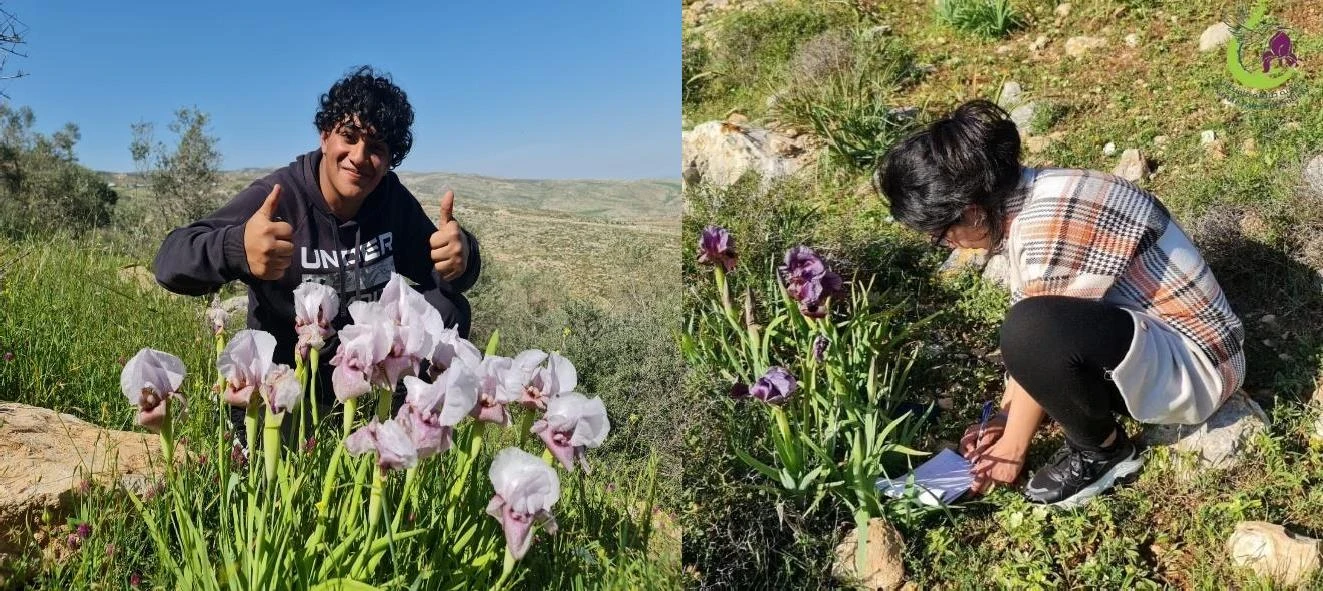
The project implemented a range of activities, including field surveys to document the distribution and population size of three Royal Iris species: Iris atrofusca, Iris lortetii, and Iris haynei. Data collection included ecological observations, habitat assessments, and the review of existing literature and datasets. Capacity-building sessions were conducted for NPS volunteers, focusing on plant identification, field survey methods, and biodiversity monitoring techniques. The project also carried out awareness and outreach activities with schools, universities, local communities, and municipal representatives through field visits, workshops, and discussion sessions to promote biodiversity conservation.
Results and Impact
The project generated updated scientific information on the distribution and population status of key endemic Royal Iris species in the North Eastern Slopes region. It strengthened the technical capacity of NPS volunteers and increased public awareness about the ecological importance of protecting native plant species. The research findings contributed to the scientific literature through publication in a peer-reviewed journal, enhancing the visibility of Palestinian biodiversity research and supporting evidence-based conservation planning.
Strategic Contribution
This initiative contributes to safeguarding Palestine’s unique plant biodiversity by strengthening scientific knowledge, building local conservation capacity, and promoting community engagement in environmental stewardship. The project supports national biodiversity conservation priorities and aligns with broader global efforts to protect threatened and endemic species within Key Biodiversity Areas.